
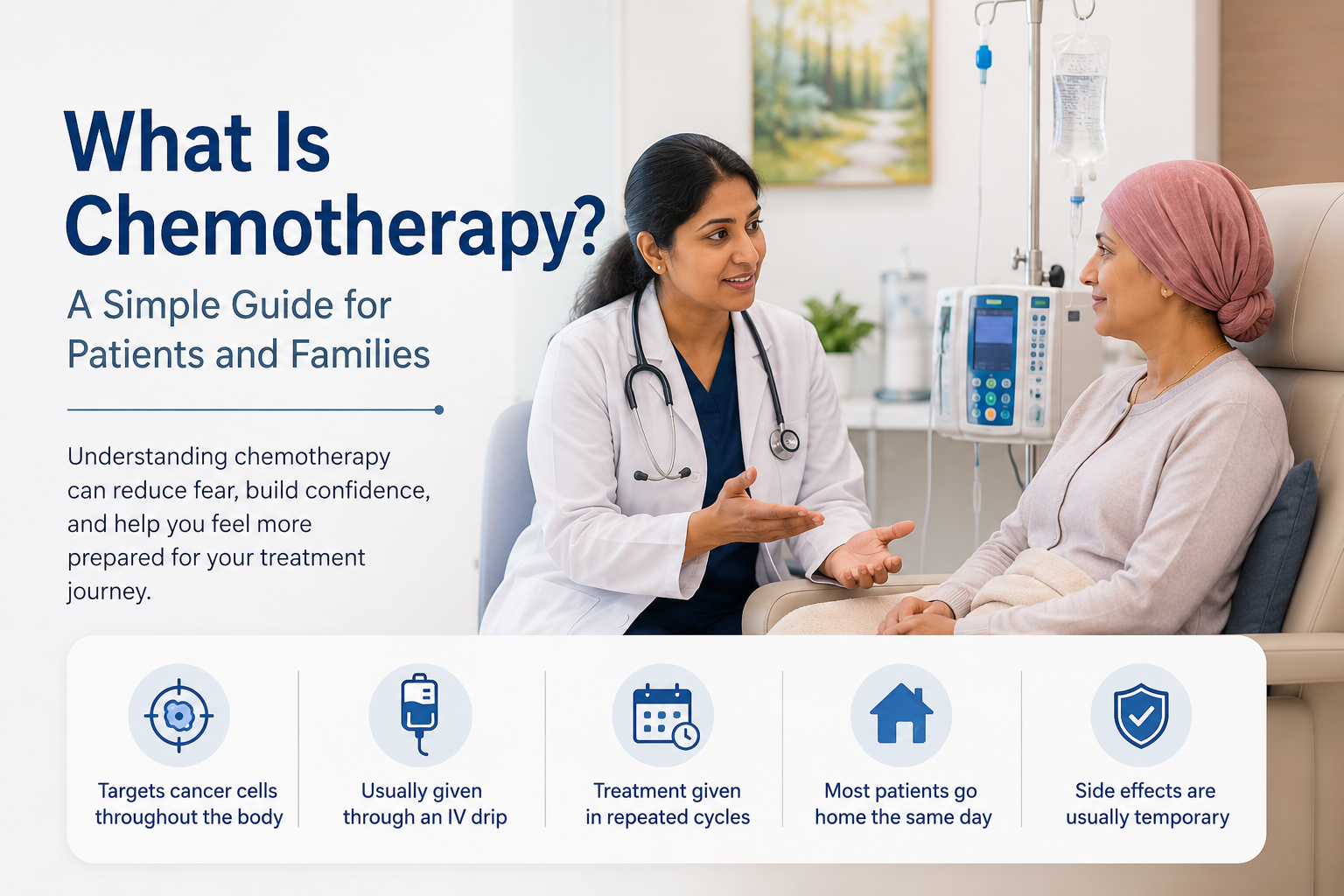
What Is Chemotherapy?
Being told that you need chemotherapy can feel frightening. Many people immediately think of hair loss, severe side effects, or spending days in the hospital. However, many of these fears come from myths or outdated information.
Modern chemotherapy has helped millions of people around the world. In many cancers, it can completely cure the disease. In others, it helps control the cancer, relieves symptoms, and allows patients to live longer with a good quality of life.
Understanding how chemotherapy works can make the treatment journey less stressful and help you feel more prepared.
Quick Summary
- Chemotherapy is a medicine used to treat cancer.
- It travels throughout the body through the bloodstream.
- It destroys cancer cells or prevents them from growing.
- It is commonly given through intravenous (IV) drips.
- Treatment is usually given in repeated cycles.
- Most patients receive chemotherapy as a day-care treatment and return home the same day.
- Side effects vary depending on the medicines used and are usually temporary.
What Is Chemotherapy?
Chemotherapy is a treatment that uses medicines to destroy cancer cells or stop them from growing and dividing.
Unlike surgery, which removes a tumour from one part of the body, chemotherapy travels through the bloodstream. This allows it to reach cancer cells almost anywhere in the body, including areas where cancer may have spread.
Chemotherapy is one of several treatments used for cancer. Depending on the type and stage of cancer, your doctor may recommend surgery, radiation therapy, chemotherapy, targeted therapy, immunotherapy, hormone therapy, or a combination of these treatments.
Why Do Patients Need Chemotherapy?
Chemotherapy may be recommended for different reasons depending on the type and stage of cancer.
It may be used:
- To cure cancer.
- To shrink a tumour before surgery (neoadjuvant chemotherapy).
- To destroy microscopic cancer cells after surgery and reduce the risk of recurrence (adjuvant chemotherapy).
- To control advanced cancer, relieve symptoms, and improve quality of life.
Your oncologist will recommend chemotherapy only when the expected benefits outweigh the potential risks for your specific cancer.
In our next article, we’ll explain in detail why chemotherapy may still be needed even after a tumour has been completely removed by surgery.
How Does Chemotherapy Work?
Cancer develops because abnormal cells keep dividing uncontrollably.
Chemotherapy works by attacking these rapidly dividing cells.
Different chemotherapy medicines work in different ways.
- Some medicines damage the DNA inside cancer cells, preventing them from making copies of themselves.
- Others block the machinery needed for cell division.
- Some interfere with the internal structures that allow a cell to split into two new cells.
When the damage becomes too severe, the cancer cell dies through a natural process called apoptosis (programmed cell death).
Because different medicines attack cancer cells in different ways, doctors often combine several chemotherapy drugs to make treatment more effective.
Why Is Chemotherapy Given in Cycles?
Not all cancer cells divide at the same time.
If chemotherapy were given only once, some cancer cells would survive because they were not actively dividing at that moment.
For this reason, chemotherapy is given in repeated cycles.
Each cycle consists of:
- Receiving chemotherapy.
- A recovery period before the next treatment.
The recovery period allows healthy cells, especially bone marrow cells, to recover before the next cycle.
Depending on the cancer and treatment protocol, chemotherapy may be given:
- Weekly
- Every 2 weeks
- Every 3 weeks (most common)
Your oncologist will determine the schedule that is most effective for your cancer.
Key Take-Home Messages
- Chemotherapy is one of the most effective treatments for many cancers.
- It treats cancer cells throughout the body, unlike surgery, which removes only the visible tumour.
- Different chemotherapy medicines work in different ways to destroy cancer cells.
- Treatment is given in cycles to allow healthy cells time to recover.
- Every chemotherapy plan is personalised based on your cancer type, stage, and overall health.
Frequently Asked Questions
Is chemotherapy the same for every cancer?
No. The medicines, doses, and treatment schedules vary depending on the type of cancer, its stage, and your overall health.
Can chemotherapy cure cancer?
Yes. For many cancers, chemotherapy can cure the disease, especially when used alone or in combination with surgery or radiation therapy.
How often is chemotherapy given?
Depending on the treatment plan, chemotherapy may be given weekly, every two weeks, every three weeks, or at other intervals recommended by your oncologist.
Is chemotherapy always given through a drip?
Many chemotherapy medicines are given through an IV drip, but some are available as tablets or capsules. Your oncologist will recommend the most appropriate treatment for your condition.
Read Next
➡️ Why Do Patients Need Chemotherapy?
➡️ Why Do I Need Chemotherapy After Surgery If My Cancer Has Been Removed?
Disclaimer
This article is intended for general patient education and should not replace personalised medical advice. Always discuss your individual treatment plan with your treating oncologist.